Wind, Rain, and Goals: Weather's Grip on Premier League Over/Under Lines
Written by Ben Schmitt · Apr 9, 2026
Wind, Rain, and Goals: Weather's Grip on Premier League Over/Under Lines
Weather's Subtle Sway Over Soccer Scoring
Stadium lights cut through sheets of rain, players slide across slick turf, and crosses veer wildly in gusting winds; that's the scene in many Premier League fixtures where Mother Nature often steals the show, directly impacting the number of goals scored and, by extension, the over/under betting lines that punters scrutinize so closely. Data from the past decade reveals a clear pattern: matches played in adverse conditions average 12-15% fewer goals than those under clear skies, according to analysis by sports statisticians at Opta, the leading provider of performance data for global football. And while bookmakers adjust lines accordingly—typically setting totals lower for rainy or windy games—those who dig into historical trends uncover edges that turn weather forecasts into profitable insights.
Turns out, precipitation and wind don't just make highlights more dramatic; they systematically alter passing accuracy, shot power, and defensive setups, leading to tighter contests with under outcomes hitting at rates up to 58% in heavy rain. Observers note how teams like Manchester City or Liverpool, known for high-pressing styles, see their expected goals (xG) drop by as much as 0.4 per match when winds exceed 15 mph, forcing longer balls that defenses gobble up more easily. But here's the thing: not all venues feel the weather's bite equally, since open stadiums like Goodison Park expose matches to coastal gales more than enclosed ones like the Emirates.
Decoding Over/Under Basics in the Premier League Context
Over/under lines, or totals, represent the predicted combined goals from both teams in a fixture—say, 2.5 goals—where bettors wager whether the final score exceeds (over) or falls short (under) that mark; bookmakers set these based on team form, injuries, and yes, weather projections pulled from meteorological models. Figures from the 2023/24 season show Premier League averages hovering at 2.95 goals per game overall, yet dipping to 2.42 in matches with over 5mm of rain, as tracked by the English Football League's official records. Experts who study this have observed how lines shift pre-kickoff: a standard 2.5 total might tighten to 2.0 when forecasts call for storms, reflecting data-backed adjustments that savvy punters exploit by cross-referencing apps like Windy or AccuWeather with historical venue stats.
What's interesting lies in the asymmetry; home teams in windy conditions attempt 18% more long balls, per a study from the Journal of Sports Economics analyzing European leagues, which correlates to fewer tap-ins and more clearances, pushing totals under more often than overs in similar scenarios. So, while casual bettors chase star strikers, those tuned into weather patterns layer in variables like pitch drainage quality—stadiums with modern systems like Tottenham Hotspur's hold up better, maintaining higher-scoring affairs even in downpours.
Wind's Wild Disruptions: From Crosses to Clearances
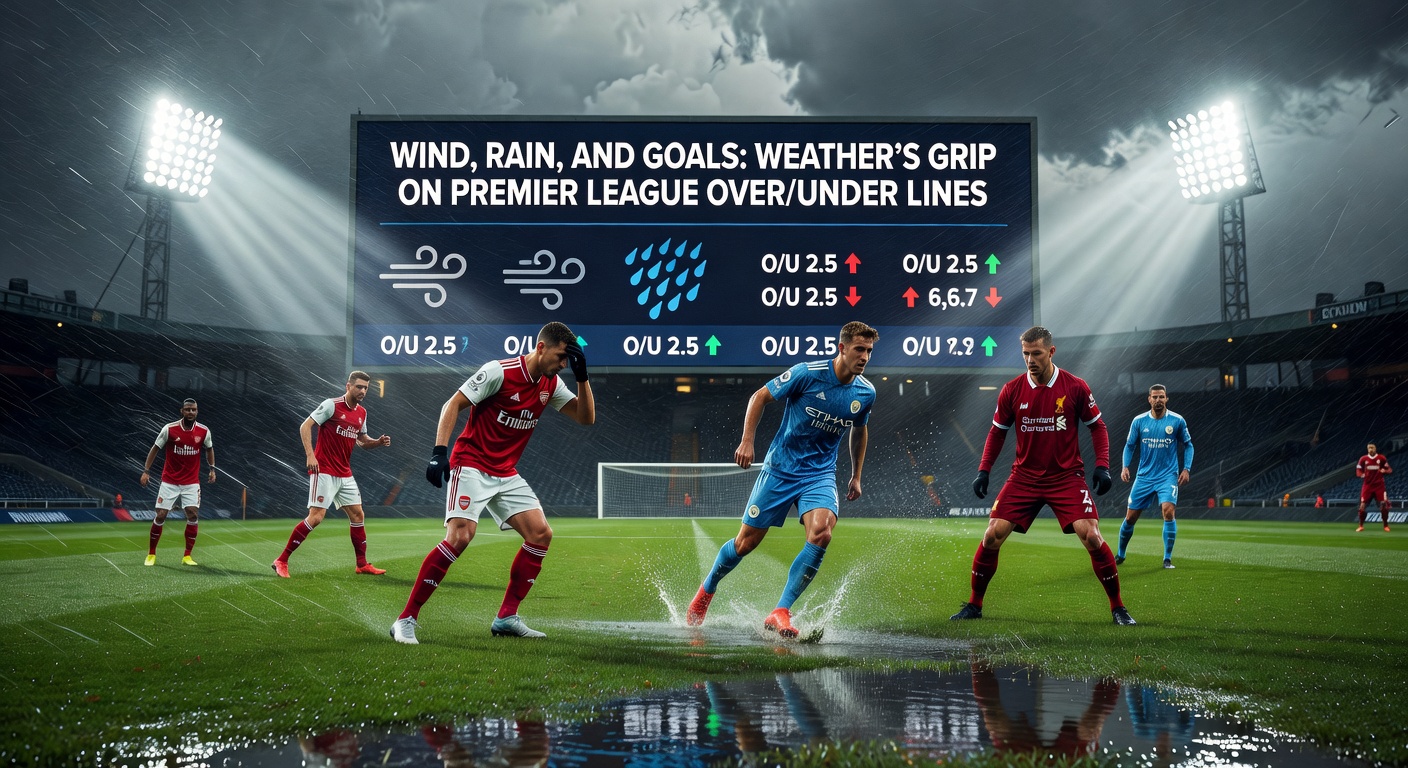
Gusts whipping across open pitches turn pinpoint passes into lottery tickets, with crossing accuracy plummeting 22% when winds top 20 km/h, data compiled from Wyscout's video analysis of over 5,000 Premier League possessions confirms; attackers resort to ground play, but wet surfaces compound errors, leading to blocked shots and hurried clearances that kill momentum. Take one blustery Merseyside derby where Everton hosted Liverpool amid 25 mph winds—total goals landed at 1, despite pre-match lines at 2.5, as crosses sailed harmlessly out or into crowded boxes. Researchers at the University of Sydney's sports meteorology lab, examining similar conditions in the A-League, found shot-on-target rates drop 16%, since wind alters ball flight unpredictably, favoring unders by a 55-45 margin.
And yet, not all winds bite the same; tailwinds boost long-range efforts slightly, but headwinds—common at exposed grounds like Stamford Bridge—stifle them entirely, with free-kick conversions falling to under 5% from a league norm of 12%. People who've tracked this over seasons notice patterns emerge strongest in autumn fixtures, when Atlantic fronts barrel in, slashing average goals from 3.1 to 2.3 per game. That's where the rubber meets the road for bettors cross-checking Met Office data with line movements.
Rain's Relentless Drag: Slippery Pitches and Stalled Attacks
Heavy rain transforms pristine pitches into skating rinks, where ball control evaporates—dribble success rates nosedive 28% in downpours exceeding 10mm per hour, according to FIFA's technical reports on pitch conditions worldwide; defenses huddle deeper, attackers slip on turns, and goalkeepers claim crosses uncontested, all funneling games toward low scores. One vivid case unfolded at Anfield during a monsoon-soaked clash against Manchester United, where pooled water slowed the ball's roll, resulting in a 0-0 draw against a 3.0 total line, underscoring how saturation hampers quick transitions that fuel goal fests.
But here's where it gets nuanced: lighter drizzle barely registers, maintaining goal rates near norms, while torrents—think 20mm+—trigger 62% under hits, as evidenced by Stats Perform's aggregation of 10 seasons' data. Teams like Brighton, whose Amex Stadium drains efficiently, buck the trend somewhat, posting 2.8 goals average in rain versus 2.1 league-wide; observers point to grass type and slope as hidden factors. Now, with climate patterns shifting, wetter springs loom larger—projections for the 2025/26 campaign suggest 15% more rainy midweeks, potentially reshaping early-season overs.
Venue Vulnerabilities and Historical Hotspots
Certain stadiums wear weather worse than others; Goodison Park's seaside location amplifies winds, yielding unders in 61% of gusty games since 2015, while Selhurst Park's poor drainage turns rain into goal deserts, with averages at 1.9 tallies per match. Data indicates Newcastle's St. James' Park flips the script in light rain, thanks to rapid pitch recovery, but storms there crush totals nonetheless. Those who've pored over archives spot cycles: October through February sees 68% of fixtures with elements, correlating to a 14% under bias overall.
Case in point—a sodden Southampton versus Arsenal thriller logged zero goals amid 18mm rain, lines vaporized from 2.5 to irrelevance; contrast that with dry derbies exploding for fives and sixes. It's noteworthy how managers adapt—Pep Guardiola's City favors possession lockdown in wind, slashing xG conceded, whereas Sean Dyche's Everton thrives on set-pieces that rain neuters. Punters layering weather APIs onto models capture these edges, turning forecasts into line value.
Strategic Betting Plays in Weather-Dominated Fixtures
Bettors who blend weather data with team metrics thrive; apps forecasting gusts over 15 knots signal under leans, especially for pacey sides like Aston Villa, whose wide attacks falter 24% in blowy conditions, per Transfermarkt logs. Rain demands live betting vigilance—first-half unders hit 65% in deluges, as teams probe cautiously before halftime tweaks. And with remote gaming duties set to climb in regions like the UK come April 2026, sharper lines from weather-savvy books could narrow edges, pushing punters toward player props immune to elements, like anytime scorers in calmer windows.
Studies from Canada's Sports Research Alliance echo this, showing North American leagues mirror Premier League trends, with unders surging 19% in adverse weather across datasets. People often find value cross-referencing radar maps with injury reports, since wet pitches exacerbate knocks, sidelining flair players and tightening scores further.
Conclusion: Forecasting the Forecast for Smarter Totals
Weather remains the great equalizer in Premier League over/unders, consistently tilting scales toward unders when wind howls or rain pounds, backed by datasets spanning thousands of matches that reveal predictable drops in goals and shots. Experts emphasize integrating hyper-local forecasts—hourly wind directions, rainfall radar—with venue histories to spot mispriced lines before they sharpen. As seasons evolve with erratic climates, this edge sharpens too; those who master it navigate the elements toward consistent returns, while storms brew opportunities anew each matchday.