Tennis Court Surfaces Shape Break Point Conversion and Accumulator Results
Written by Ben Schmitt · Aug 15, 2026
Tennis Court Surfaces Shape Break Point Conversion and Accumulator Results
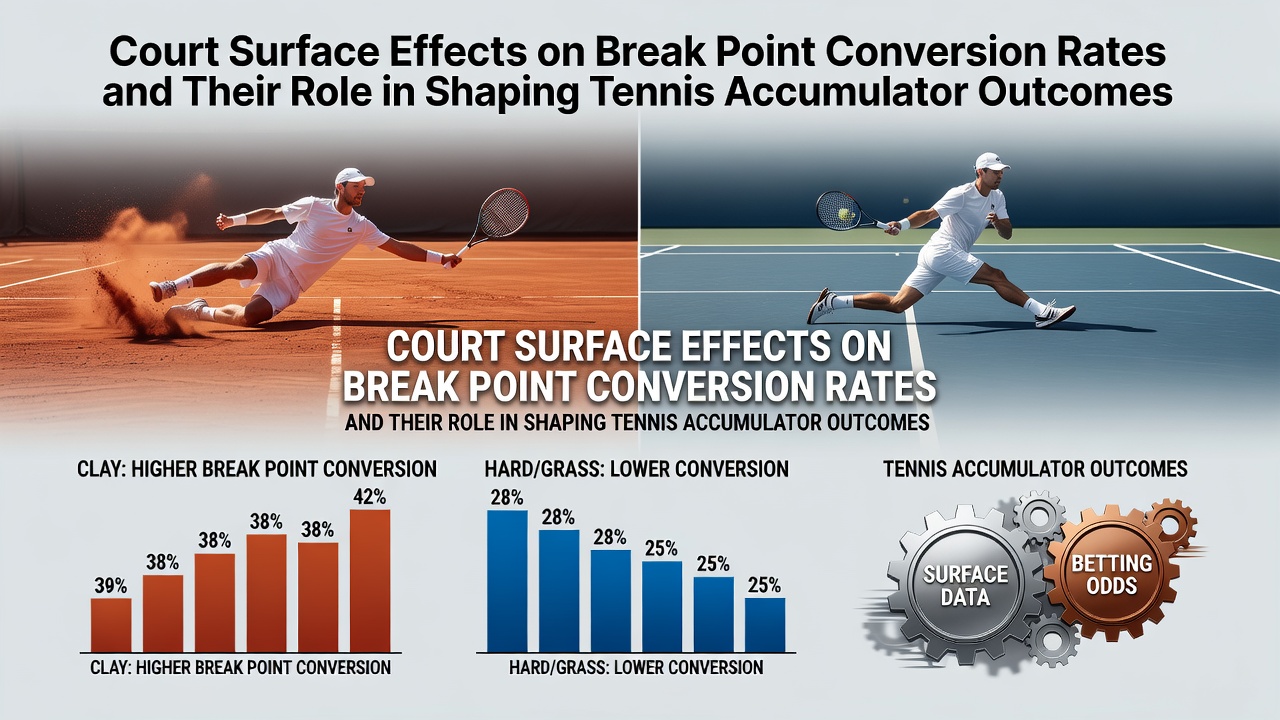
Clay courts slow the ball and produce higher bounces, which shifts break point conversion rates upward for players who rely on consistent baseline rallies, while grass courts reward aggressive serving and keep those same rates lower overall. Hard courts sit between the two extremes and deliver more balanced statistics across recent seasons. Observers note that these surface-driven patterns feed directly into multi-leg accumulator strategies because bettors must account for venue-specific conversion averages when stacking matches from different tournaments.
Clay Courts Raise Conversion Percentages
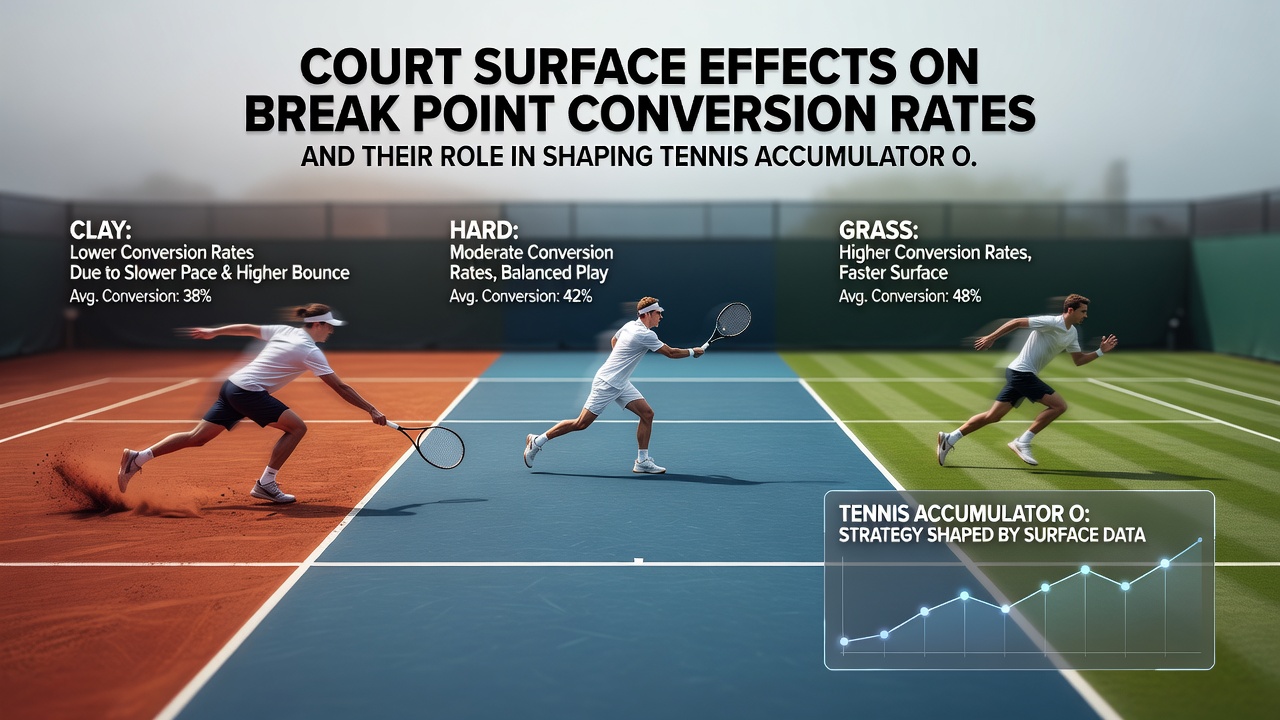
Researchers tracking ATP and WTA events report that break point conversion on clay often exceeds 42 percent across full seasons, since longer rallies give returners more opportunities to capitalize on second serves. Players such as those who excel at the French Open demonstrate higher success because the surface reduces the effectiveness of big serves, and data collected through August 2026 continues to show this trend holding steady. Accumulator builders therefore adjust their selections when legs involve clay events, because the elevated conversion numbers increase the likelihood that underdogs can snatch sets and matches.
Grass Suppresses Break Opportunities
Grass produces the opposite effect: conversion rates typically fall to the low 30 percent range, as serves skid through and points end quickly. Wimbledon records illustrate this pattern year after year, and experts who compile historical data confirm that even strong returners convert fewer break points on the surface. Bettors constructing accumulators therefore treat grass matches with greater caution when projecting multiple breaks across several legs, since the lower rates reduce variance but also limit scoring bursts that might otherwise appear in parlays.
Hard Courts Offer Middle-Ground Data
Hard courts, used at the Australian Open and US Open among others, generate conversion figures that hover near 38 percent, according to aggregated match logs from major tours. The surface allows moderate serve speeds and consistent bounces, so neither servers nor returners gain an overwhelming edge. Those who study accumulator performance note that hard-court legs introduce fewer surface-specific distortions, yet they still require careful cross-referencing with player-specific return statistics to avoid overestimating break potential in multi-match wagers.
Accumulator Construction Adjusts for Surface Variables
Professional bettors and data analysts build surface-adjusted models that weight each leg according to historical conversion rates rather than raw player rankings. A clay-court match between two baseline specialists might carry a higher implied break frequency than a grass-court encounter featuring two serve-dominant players, and this distinction alters stake distribution across the accumulator. Recent figures released by tennis analytics groups show that models incorporating these adjustments improved accuracy by measurable margins during the 2025 and 2026 seasons.
One study compiled by sports scientists at an Australian university examined over 12,000 tour-level matches and found that surface type explained a larger share of break point variance than player fatigue or weather conditions alone. The findings encouraged betting syndicates to refine their algorithms before the North American hard-court swing and the European clay season, and the same methodology remains in use as tournaments progress into late summer 2026. Observers note that accumulators spanning multiple surfaces benefit most from these layered calculations because each additional leg compounds the surface effect.
Player Adaptability Influences Outcomes
Some competitors maintain high conversion rates regardless of surface, while others show sharp drops when moving from clay to grass. Analysts who review individual match data highlight that these adaptability gaps become critical when accumulators include legs from different tournaments in quick succession. For example, a player who converts 48 percent of break points on clay but only 29 percent on grass forces bettors to recalibrate expectations for any leg that switches surfaces mid-week.
Conclusion
Surface characteristics continue to dictate break point conversion patterns across professional tennis, and those patterns in turn shape the structure and risk profile of accumulator bets. Data from clay, grass, and hard courts provide distinct baselines that models must incorporate to produce realistic projections. As tournaments unfold through August 2026 and beyond, analysts who integrate surface-specific statistics maintain an edge in forecasting the outcomes of multi-leg wagers that combine matches from varied venues.