Rest Day Variations Across Professional Leagues and Their Role in Cross-Sport Accumulator Construction
Written by Jakob Lorenz · Aug 11, 2026
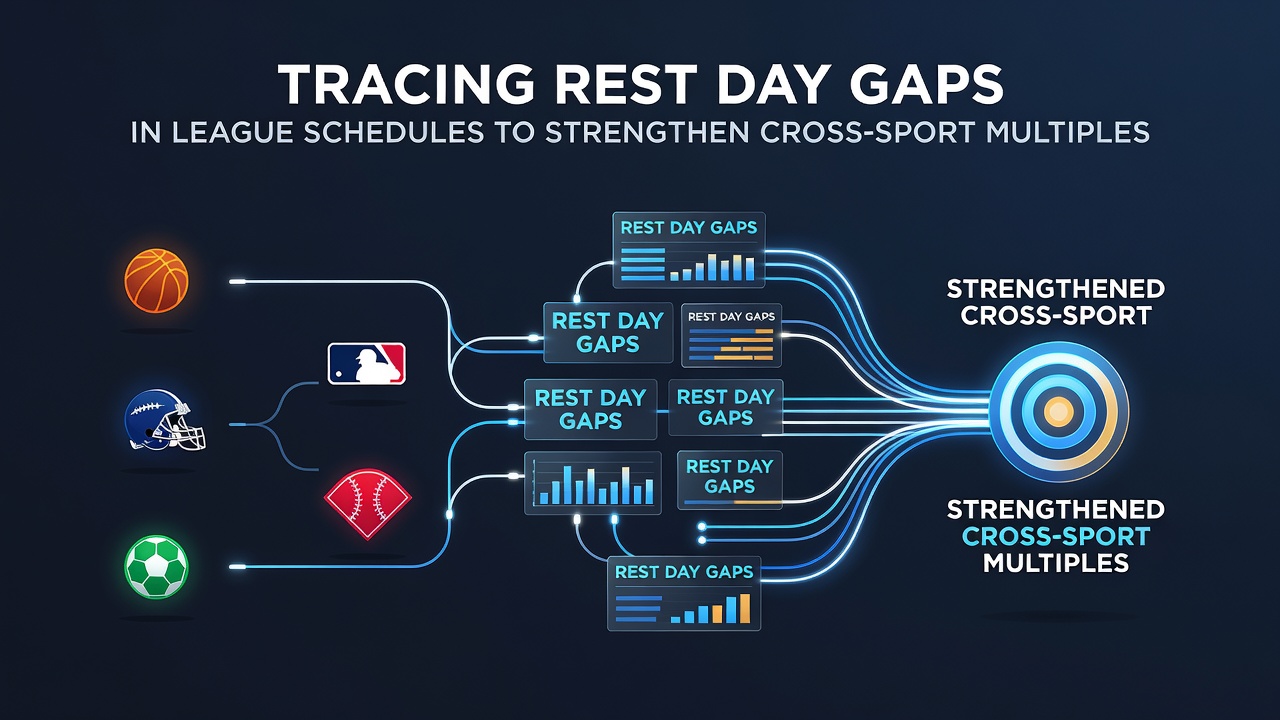
Rest Day Variations Across Professional Leagues and Their Role in Cross-Sport Accumulator Construction
Professional sports leagues release annual calendars that reveal distinct patterns in recovery time between fixtures, and analysts track these intervals to inform multi-sport accumulator selections where performance edges emerge from uneven rest distribution. Data from major competitions shows that teams facing back-to-back games without adequate recovery often post lower scoring outputs and defensive metrics compared to opponents entering contests with two or more rest days.
Schedule Structures and Recovery Metrics
NBA franchises navigate an 82-game regular season that includes multiple back-to-backs and occasional three-games-in-four-nights stretches, while European soccer clubs balance domestic league matches with midweek Champions League or Europa League fixtures that compress recovery windows to 48 hours or less. Observers note that these compressed schedules correlate with measurable declines in player efficiency ratings and shot accuracy during subsequent games, according to tracking data compiled by league statisticians. In contrast, NFL teams receive designated bye weeks that provide seven to ten days of rest, creating opportunities for cross-sport accumulators pairing rested American football squads with soccer sides coming off short-turnaround midweek fixtures.
Performance Data Patterns
Studies from university sports science departments indicate that basketball teams with at least two rest days before road contests improve their win percentage by several points over the season, whereas those on short rest show elevated turnover rates and reduced three-point shooting efficiency. Similar findings appear in soccer analyses where clubs playing after fewer than 72 hours between matches concede more goals from set pieces due to fatigue-related positioning errors. Those who compile historical fixture lists across leagues find that rest differentials become particularly pronounced during December and January when holiday scheduling and European competitions overlap, producing clusters of games with minimal recovery gaps for certain clubs.
Cross-Sport Accumulator Applications
Bettors constructing accumulators that span basketball, soccer, and American football examine these rest differentials to identify legs where one side enters with a clear recovery advantage. A schedule gap analysis might pair an NBA team coming off a three-day rest period against an opponent on a back-to-back with a soccer side that enjoyed a full week between domestic matches and a rested NFL squad during its bye week. Figures from league schedule databases reveal that such combinations appear most frequently during the winter months when overlapping seasons create natural contrasts in fixture density.

August 2026 marks the release window for several major league schedules, including the NBA and European soccer calendars, and preliminary drafts already indicate continued emphasis on international breaks and condensed tournament formats that will again test recovery management. Those tracking fixture releases note that early indications point to several high-profile clubs facing tight turnaround sequences around the winter holidays, patterns that historically influence accumulator outcomes when paired with leagues offering longer rest intervals.
Regional Schedule Variations
North American leagues tend to cluster games around weekends and holidays to maximize attendance and television audiences, whereas many European soccer competitions distribute fixtures across midweek slots to accommodate broadcast rights. Australian and Canadian sports bodies publish calendars that incorporate travel demands across vast distances, adding another layer to rest calculations because long-haul flights reduce effective recovery time even when calendar gaps appear sufficient on paper. Research papers from sports analytics groups demonstrate that incorporating travel-adjusted rest metrics improves predictive models for cross-league performance comparisons.
Practical Tracking Methods
Analysts maintain databases that flag upcoming fixtures wth rest differentials exceeding two days or falling below 48 hours, then cross-reference these entries with injury reports and travel itineraries released by team operations departments. This approach allows construction of accumulator selections where legs align around documented schedule advantages rather than relying solely on team form or head-to-head history. Data from multiple seasons shows consistent correlations between rest advantages and key performance indicators such as points scored per possession in basketball or expected goals created in soccer.
Conclusion
League calendars function as foundational datasets for those building cross-sport accumulators because rest day distributions directly influence measurable outcomes across competitions. Systematic examination of schedule gaps, when combined with performance statistics from various regions, provides a structured method for identifying edges that span basketball, soccer, and American football seasons. As new calendars emerge for the 2026-2027 cycle, updated rest analyses will continue to inform accumulator construction practices.