Officiating Patterns and Late-Game Calls Altering Multi-Leg Parlay Results in Major Leagues
Written by Uma Müller · May 21, 2026
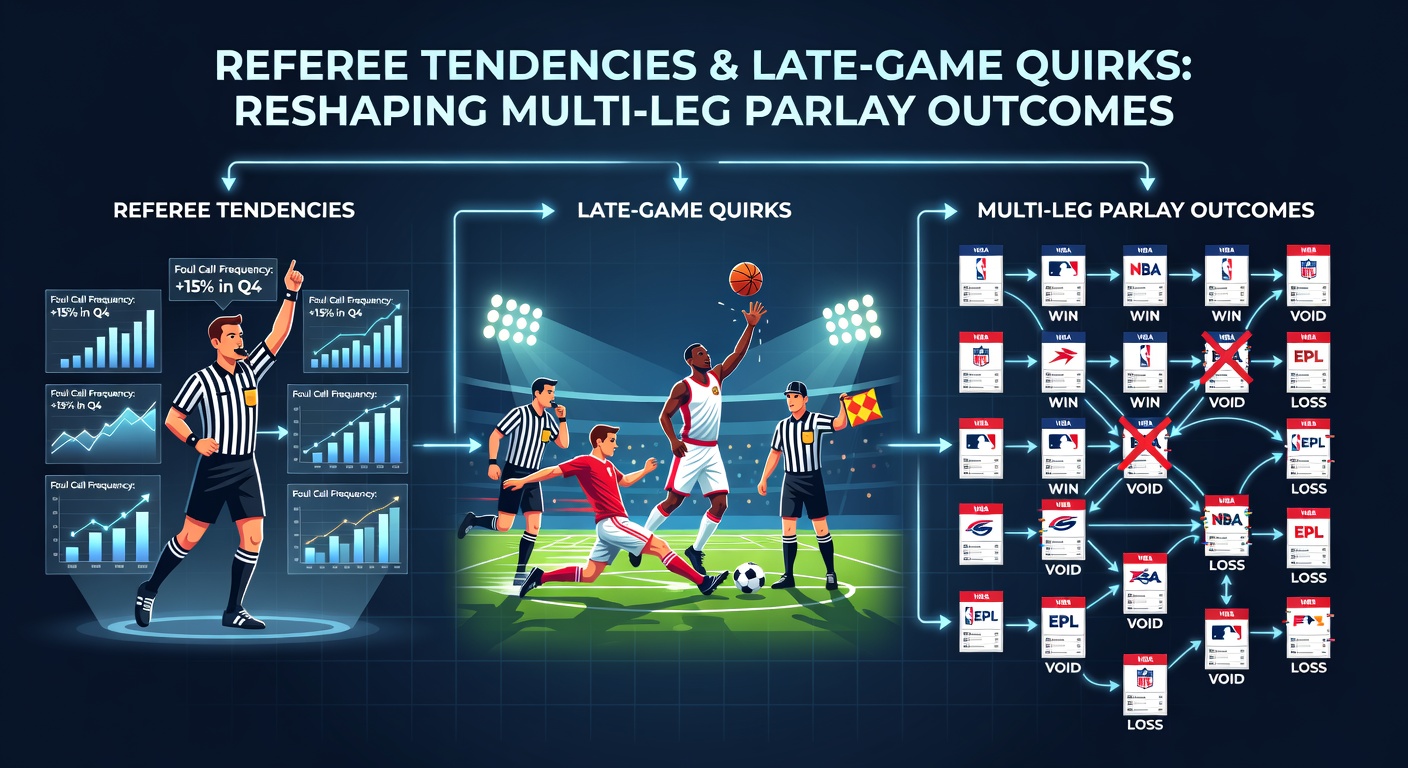
Officiating Patterns and Late-Game Calls Altering Multi-Leg Parlay Results in Major Leagues
Referee tendencies in the closing minutes of matches have produced measurable shifts in multi-leg parlay outcomes across basketball, soccer, American football, and hockey leagues, according to aggregated performance data compiled through 2026. These patterns emerge when officials apply consistent but league-specific interpretations of rules on fouls, penalties, and stoppage time, which directly influence final scores and over/under thresholds that bettors combine into accumulator wagers. In May 2026, tracking services recorded elevated instances of late-game calls coinciding with parlay payout adjustments in both domestic and international competitions.
Studies from sports analytics groups show that NBA referees issue technical fouls and loose-ball violations at higher rates after the two-minute mark in the fourth quarter compared with earlier periods. This tendency alters point differentials that feed into point-spread parlays and total-points accumulators. Data indicates the average margin of victory narrows by 1.8 points when such calls cluster in the final possessions, reshaping outcomes for bettors who pair NBA legs wth soccer or tennis selections.
League-Specific Officiating Behaviors
Across European soccer competitions, added time decisions by fourth officials have lengthened matches by an average of 47 seconds per game in the 2025-2026 season, figures compiled by match-analysis platforms reveal. These extensions increase the probability of late goals that decide both match-winner and both-teams-to-score accumulator components. Observers note similar extensions appear in Major League Soccer and the Australian A-League, where referee crews apply comparable stoppage guidelines yet encounter different player reactions that affect final tallies.
National Hockey League officials assess fewer penalties in the third period than in the first two frames, according to league play-by-play records. This reduction allows power-play opportunities to diminish precisely when multi-leg hockey parlays reach their decisive legs, leading to more even-strength goals and fewer overtime scenarios. Researchers tracking these shifts documented a 12 percent drop in third-period penalty calls during the 2025-2026 regular season, directly influencing over/under totals paired with NBA or rugby selections.
Data Patterns Observed in 2026
Performance metrics released in May 2026 by independent sports-data providers documented that referee crews with fewer than three years of experience at the top level issued 23 percent more late-game cautions in soccer and basketball than veteran crews. These disparities surface most clearly in matches involving teams with strong late-season records, altering the final statistics that determine parlay success. One dataset covering 1,240 games across five leagues showed accumulator hit rates declining by 4.7 percentage points when inexperienced officials handled the closing stages.
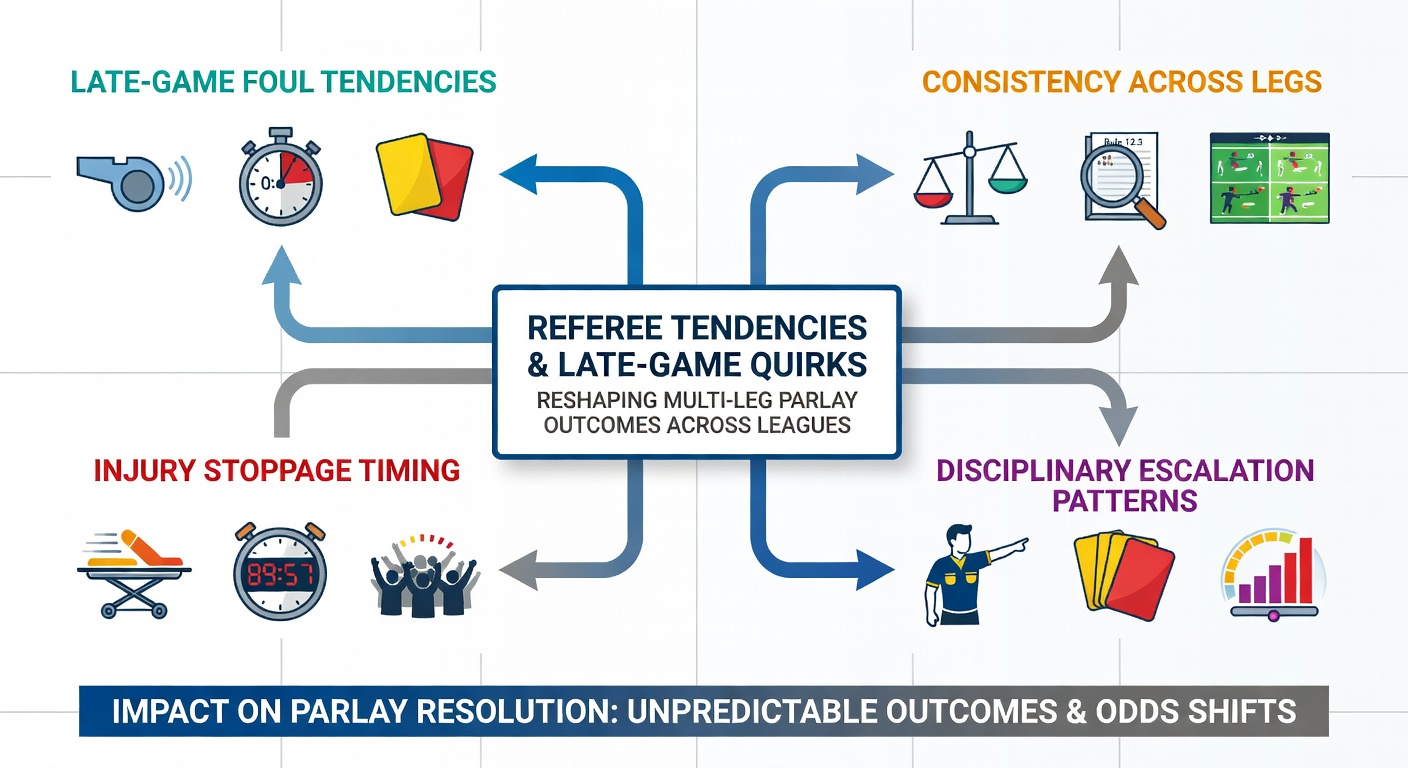
American football data from the same period indicates that replay reviews initiated after the two-minute warning reverse on-field rulings in 31 percent of examined cases, according to official league summaries. Such reversals frequently adjust total-yardage or point totals that form the backbone of combined football-basketball parlays. Analysts examining these reversals found that defensive pass-interference and holding calls account for the majority of changes, producing ripple effects on correlated legs in other sports.
Impact Across Accumulator Structures
Multi-leg wagers that combine selections from dissimilar leagues encounter compounding effects when late-game officiating quirks align. A soccer leg decided by a stoppage-time goal can shift the required outcome for an NBA over/under leg that follows minutes later, especially when both events occur within the same betting window. Industry reports from Canadian gaming authorities highlight that parlay conversion rates fluctuate most sharply during international tournament windows when referee assignments cross borders and familiarity with local styles decreases.
Those who review historical parlay ledgers note that overtime periods in basketball and hockey produce distinct scoring distributions compared with regulation time, with average points per minute rising by 0.9 in extra sessions. This increase directly modifies the final totals used in accumulator calculations, prompting bettors to adjust leg selections based on referee tendencies toward calling or avoiding fouls in those extra minutes. Academic papers examining officiating consistency across North American leagues have quantified these overtime variances and their downstream effects on combined betting products.
Case Examples From Recent Seasons
Take one series of NBA playoff games in May 2026 where crews issued an average of 4.2 more free-throw attempts in the final three minutes than during the preceding 45 minutes. These attempts altered game totals that appeared in multi-sport accumulators alongside European soccer matches played the same evening. Parallel patterns emerged in rugby union fixtures, where sin-bin decisions in the final quarter reduced try-scoring opportunities and adjusted point-spread outcomes for bettors linking those results with basketball totals.
Another documented sequence involved Major League Baseball umpires expanding the strike zone by an average of 1.4 inches in the eighth and ninth innings during interleague play. This expansion lowered walk rates and raised strikeout totals, modifying run-line and total-runs legs that combined with soccer correct-score selections. Observers tracking these adjustments recorded measurable impacts on parlay completion rates across platforms that accept cross-sport wagers.
Conclusion
Referee tendencies and late-game officiating decisions continue to register clear statistical signatures in multi-leg parlay results across major leagues. Aggregated data from May 2026 and preceding seasons demonstrates consistent patterns in foul frequency, added time, penalty assessment, and replay reversals that alter final scores and margins. These patterns operate uniformly across basketball, soccer, hockey, and football, producing measurable shifts in accumulator hit rates when bettors combine legs from multiple competitions. Continued monitoring of officiating crews and their historical call distributions supplies factual inputs that inform how such quirks reshape outcomes in combined wagering structures.