Layering Tennis Serve Analytics with Football Corner Markets in Advanced Betting Structures
Written by Jonas Schmitz · Aug 6, 2026

Layering Tennis Serve Analytics with Football Corner Markets in Advanced Betting Structures
ATP serve statistics provide measurable indicators of player performance across grass, clay and hard courts, while Premier League corner markets track set piece frequency based on team attacking patterns and defensive setups. Observers note that first serve percentages above 65 percent correlate with extended rally control in professional matches, and this data aligns with corner counts that rise when teams maintain possession in wide areas during domestic fixtures. Layered bet structures combine these elements into multi-leg wagers where outcomes from one sport offset variables in another, creating hedging opportunities that data providers have documented through historical match logs.
Core Metrics in ATP Serve Analysis
Players who convert first serve points at rates exceeding 75 percent during grand slam events often sustain momentum across best-of-five sets, whereas second serve win rates below 50 percent expose vulnerabilities against aggressive returners. Tournament organizers publish these figures weekly through official channels, allowing analysts to identify patterns such as elevated ace counts on faster surfaces that exceed 12 per match. Research indicates that serve direction splits, tracked via ball tracking systems, reveal preferences for wide serves in deuce courts that increase break point conversion resistance, and these tendencies hold steady across multiple seasons according to aggregated player data.
Premier League Corner Market Characteristics
Corner markets in the Premier League fluctuate with team styles, where sides averaging 6.5 corners per game at home grounds show elevated numbers during matches against lower-ranked opponents. Data shows that set piece volume increases when full backs push high and crosses originate from the final third, producing averages that reach 7.8 corners in certain fixture types during the 2025-2026 campaign. League tables compiled by performance analysts demonstrate that teams with higher expected goals from wide areas also generate more corners in the second half, a trend that persists across home and away splits without significant deviation.
Constructing Layered Bet Structures
Bettors combine an ATP player’s first serve percentage threshold with a Premier League team’s corner over line in single ticket formats that require both conditions to resolve positively. One study revealed that pairing serves held above 80 percent in best-of-three matches with corners exceeding 5.5 in concurrent football fixtures produced payout structures that account for independent variance between the sports. Analysts have observed that timing entries around specific rounds, such as ATP 500 events overlapping with midweek Premier League fixtures, allows for staggered settlement where early tennis results inform adjustments to football stakes. This approach relies on statistical independence rather than direct causation, a distinction that data models emphasize through correlation coefficients remaining below 0.15 across sampled seasons.
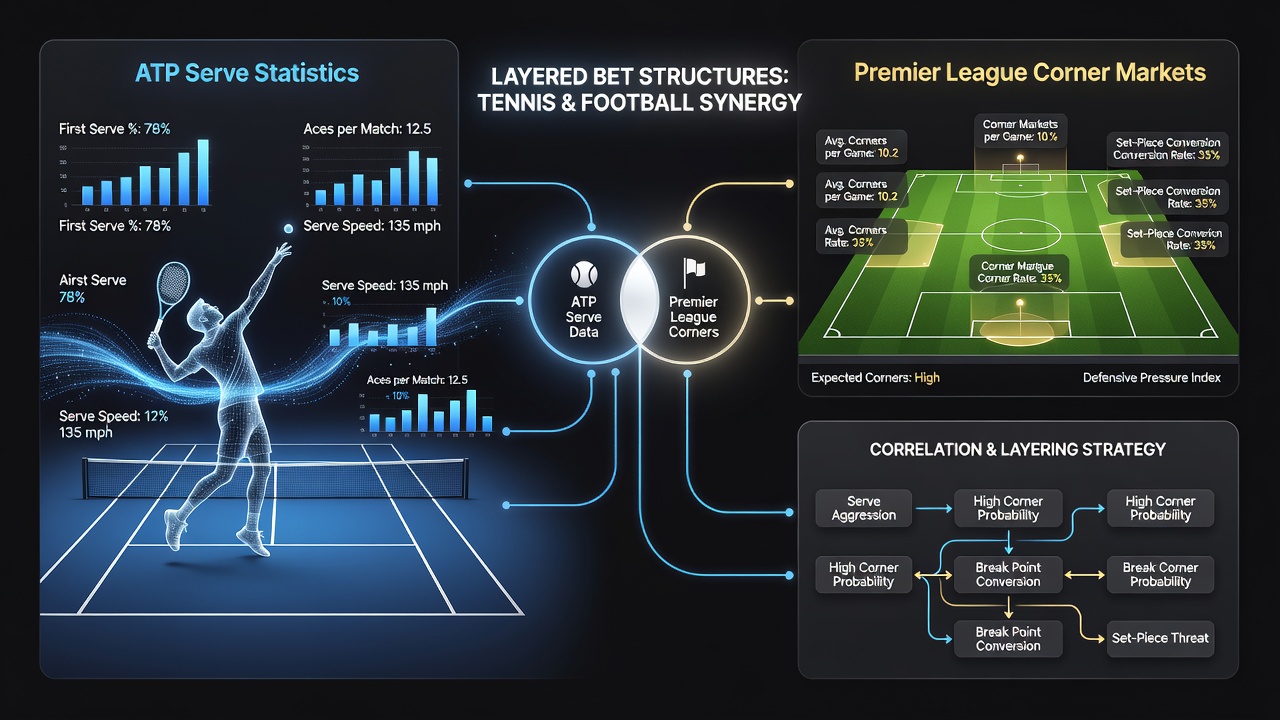
Additional layers incorporate player surface adjustments, since grass court serve statistics from Wimbledon often exceed hard court baselines by 4 to 6 percentage points, and these can offset corner markets drawn from matches played under varying weather conditions. Figures reveal that integrating over 2.5 sets in tennis with corner handicaps in football creates compounded odds that reflect separate event probabilities without shared risk factors. Industry reports from organizations such as the European Gaming and Betting Association document rising interest in cross-sport accumulators among regulated operators, noting volume increases during overlapping calendar periods in 2026.
Data Integration Techniques
Statistical platforms aggregate ATP serve direction heat maps with Premier League corner location data to identify value discrepancies in bookmaker lines. Those who have examined multi-year datasets find that serve hold percentages above established thresholds pair effectively with corner markets priced at even money when home teams face opponents averaging fewer than four corners away from their stadium. External validation comes from academic sources including studies published through the International Journal of Sports Science, which confirm low cross-sport dependency and support the viability of independent leg construction. August 2026 schedules show simultaneous ATP hard court swing events and early Premier League rounds, providing repeated opportunities for such pairings without seasonal overlap conflicts.
Risk Distribution Across Layers
Layered structures distribute exposure by requiring sequential or simultaneous resolutions rather than single event dependency, which reduces variance compared with same-sport accumulators. Performance records indicate that serve statistics remain stable within a 3 percent margin across consecutive matches on the same surface, whereas corner markets display greater match-to-match fluctuation tied to tactical adjustments. This contrast allows one component to act as a stabilizer while the second introduces upside potential within controlled parameters.
Conclusion
Pairing ATP serve statistics with Premier League corner markets enables structured layering that draws on documented performance indicators from each sport. Data integration relies on independent variables, surface adjustments and fixture timing to maintain separation between legs. Observers continue to track these combinations through ongoing seasons as regulatory frameworks and operator offerings evolve across multiple jurisdictions.