Fixture Congestion and Squad Rotation Patterns Across Europe's Leading Soccer Leagues
Written by Jonas Schmitz · Jul 9, 2026
Fixture Congestion and Squad Rotation Patterns Across Europe's Leading Soccer Leagues
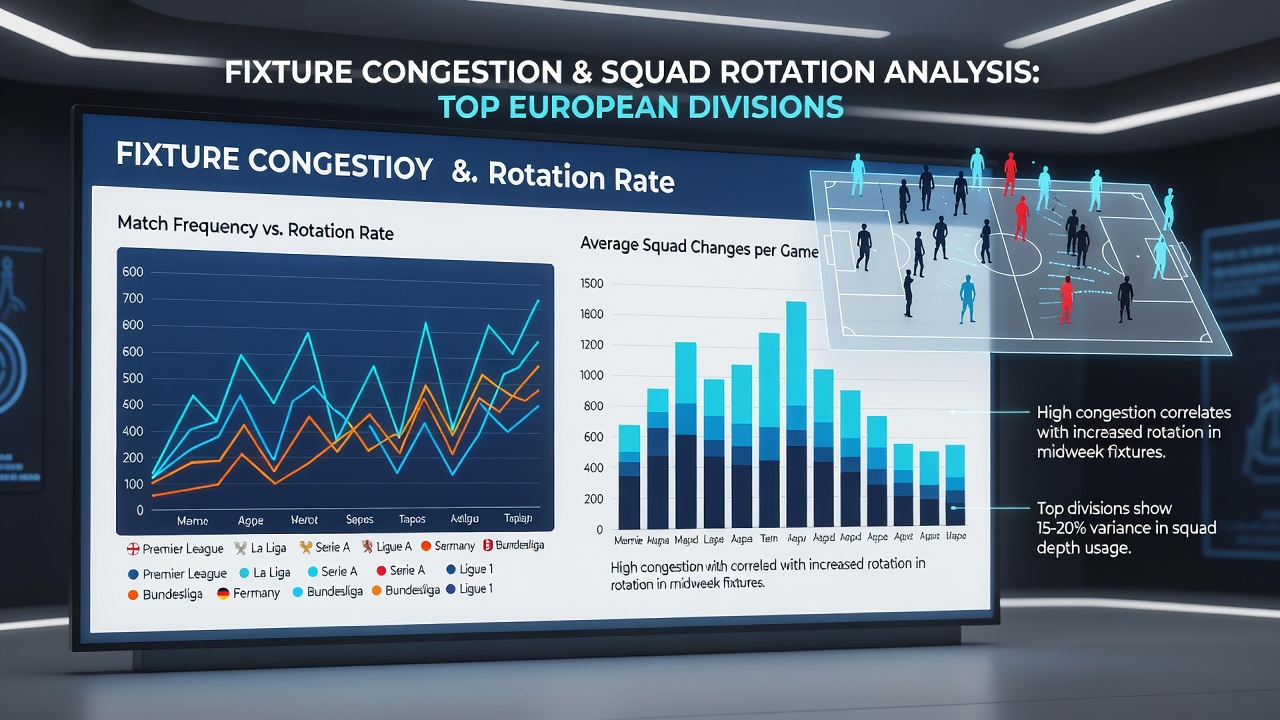
European soccer schedules create intense periods where clubs contest multiple competitions simultaneously, and data from the 2024-25 and 2025-26 seasons illustrate how fixture congestion influences rotation decisions in the Premier League, La Liga, Serie A, Bundesliga and Ligue 1. Teams typically face between 50 and 70 matches per campaign when domestic cups and continental ties are included, with clusters of three or four games inside ten days occurring most frequently between December and March.
Match Volume and Overlap Patterns
Figures compiled by league authorities show that Premier League sides averaged 52 competitive fixtures in 2024-25, while clubs advancing deep into the UEFA Champions League often exceeded 60. Similar totals appear in La Liga and Serie A, although the Bundesliga tends to schedule fewer midweek rounds outside European weeks. Observers note that July 2026 will mark the start of pre-season planning for the 2026-27 campaign, with clubs already factoring in expanded FIFA calendar windows that include additional international breaks ahead of the expanded Club World Cup cycle.
Rotation becomes most pronounced when a team plays on Saturday and then travels for a Tuesday Champions League fixture, followed by another domestic match the following weekend. Researchers tracking player-tracking data have recorded average squad usage rates rising from 18 players per match in low-congestion weeks to 22 players during peak periods.
Performance and Workload Metrics
Studies published by sports-science departments at universities in Germany and Spain examined heart-rate and GPS data across 12 clubs and found that players logging more than 450 minutes across a 14-day window exhibit measurable drops in high-intensity running output. Bundesliga clubs, which already play an 18-match first half before the winter break, rotate central midfielders at higher rates than their Spanish counterparts during comparable windows. Serie A sides, by contrast, show greater consistency in starting elevens outside European weeks yet increase rotation sharply once Coppa Italia ties overlap with league fixtures.
League-Specific Rotation Trends
- Premier League clubs deploy an average of 2.8 changes to the previous match's starting lineup during congested blocks, according to Opta-derived line-up records.
- La Liga teams average 2.1 changes, with managers often preserving key attackers for home fixtures after midweek travel.
- Bundesliga rotation reaches 3.4 changes per game in December, reflecting the league's physical style and earlier winter break.
One longitudinal analysis covering the 2022-23 through 2025-26 seasons indicated that teams finishing in the top four of their domestic table rotate more aggressively than mid-table sides, largely because they carry larger squads and face deeper European runs. Mid-table clubs with thinner benches tend to repeat core personnel until injury or suspension forces adjustments.
Injury and Recovery Data
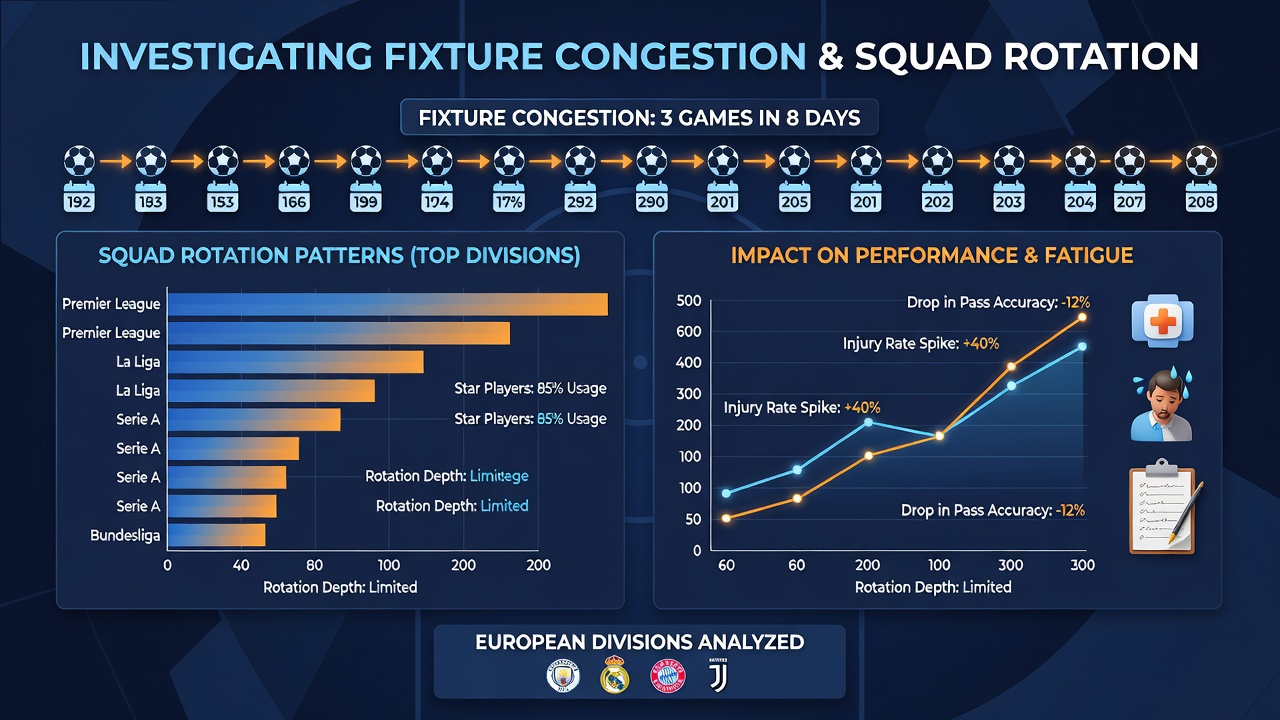
Medical reports submitted to UEFA's club monitoring system reveal that muscle-injury incidence rises 18 percent during months containing three or more matches per week. Recovery protocols now incorporate individualized load-management plans, with clubs in Ligue 1 particularly reliant on sports-science staff to decide which players receive rest. Data from the French league's 2025-26 winter period showed a 12 percent reduction in soft-tissue injuries among sides that rotated at least three outfield players every other match.
Goalkeepers remain the exception across all five leagues, rarely rotating even during the busiest stretches because of the specialized nature of the position and limited backup options at many clubs. Full-backs and central defenders experience the highest rotation frequency, followed by central midfielders tasked with covering high distances.
Strategic Considerations for 2026 and Beyond
Clubs have begun aligning squad-building strategies with projected fixture calendars released by domestic federations and UEFA. The 2025-26 season already incorporated additional rest days after international breaks, yet July 2026 will introduce further adjustments as governing bodies finalize post-tournament scheduling. Analysts tracking transfer-market activity note increased spending on versatile squad players capable of covering multiple positions, thereby reducing the risk of fatigue-related performance decline.
Teams that reached the latter stages of both domestic cups and European competitions in 2024-25 demonstrated the clearest evidence of structured rotation cycles, with managers publishing weekly squad lists that balanced minutes across attackers, midfielders and defenders. Those patterns are expected to continue as fixture lists grow more dense.
Conclusion
Fixture congestion continues to shape rotation decisions throughout Europe's top divisions, with measurable differences emerging between leagues that maintain winter breaks and those that do not. Workload data, injury statistics and line-up records together demonstrate that clubs adapt their selections according to both immediate match demands and longer-term squad-preservation goals. As calendars evolve toward July 2026, rotation strategies will remain central to competitive planning across the Premier League, La Liga, Serie A, Bundesliga and Ligue 1.