Examining Schedule Congestion Effects on Parlay Combinations Involving European Football Leagues and ATP Tournaments
Written by Uma Müller · Jun 25, 2026

Examining Schedule Congestion Effects on Parlay Combinations Involving European Football Leagues and ATP Tournaments
Fixture density refers to the concentration of matches within short time frames and researchers have tracked its measurable influence on team and player performance across European football leagues alongside ATP tennis events. Data from major competitions shows that periods with elevated match counts correlate with shifts in win rates, goal tallies, and set outcomes that directly affect multi-sport parlay constructions.
European leagues such as the Premier League, Bundesliga, and Serie A operate under packed calendars that include domestic fixtures, cup ties, and continental competitions while ATP tournaments follow a global circuit where players often compete in successive weeks without extended recovery windows. Observers note that these overlapping demands create fatigue patterns which statistical models have quantified through metrics like distance covered, error rates, and recovery intervals.
Defining Fixture Density in Context
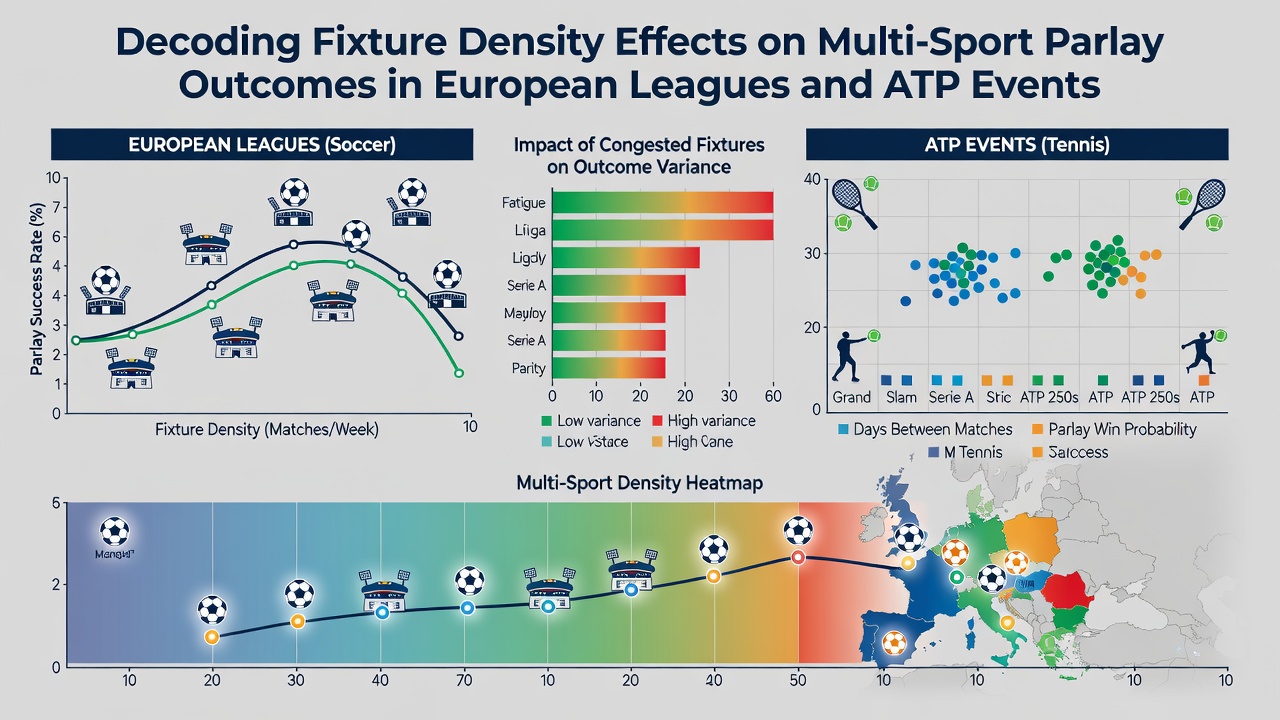
Analysts calculate fixture density by counting competitive matches per player or squad over rolling seven- to fourteen-day periods and studies indicate thresholds above three matches in seven days for footballers or four tournaments in six weeks for tennis professionals tend to produce measurable declines in key performance indicators. European football data reveals that teams navigating midweek European ties alongside weekend league games exhibit reduced high-intensity running output while ATP records demonstrate elevated unforced error counts during second-week tournament play following lengthy travel.
These patterns matter for parlay builders who combine selections from both sports because a single leg resting on an over or a player win can hinge on whether the relevant squad or athlete has faced recent congestion. Figures from season-long tracking show variance in outcomes widens when density spikes coincide with travel or weather variables.
Patterns in European Football Leagues
Across the top five European leagues researchers have documented that clubs with fixture piles in November and December often post lower expected goal values in subsequent matches and data indicates a corresponding rise in draw frequency when two congested sides meet. Multi-sport parlays that pair football totals with tennis set overs benefit from recognizing these windows because lower-scoring tendencies in fatigued leagues can offset higher-variance tennis lines during the same calendar stretch.
One analysis of Bundesliga schedules between 2022 and 2025 revealed that teams playing four matches in fourteen days averaged 0.3 fewer goals per game compared with standard weeks while similar patterns appeared in Serie A during Coppa Italia rounds. Parlay constructors who adjust totals downward during these intervals have recorded improved strike rates according to aggregated betting exchange data.
ATP Tournament Scheduling and Player Load
ATP events cluster on the calendar with hard-court swings in North America and Europe creating back-to-back obligations for top-ranked players and performance databases show that participants in consecutive 500-level events display reduced first-serve percentages after the initial tournament. Those compiling parlays that include both league football and ATP matches therefore monitor individual player schedules to identify legs where recent density may suppress hold percentages or inflate break opportunities.
Records from the 2024 and 2025 seasons indicate that players contesting three events within four weeks posted win percentages approximately six points below their seasonal averages when facing opponents with lighter schedules. This differential becomes relevant when parlay models incorporate ATP underdog lines alongside football accumulator selections during overlapping European league windows.
Interplay Between Football and Tennis Legs in Parlays
Multi-sport parlay structures gain complexity when selections span football and tennis because fixture density operates on different cycles in each sport yet shares calendar pressure points around international breaks and major tournament clusters. Research indicates that combining a football draw selection from a congested league round with an ATP total games over can hedge variance when both legs align with documented fatigue effects.
European schedule data shows December and January as peak density months for football while ATP indoor hard-court events in February often follow the Australian swing creating a secondary load period. Observers tracking combined outcomes report that parlays constructed during these intersections display altered payout distributions compared with off-peak periods.
Adjusting Models for Density Variables
Quantitative approaches now incorporate fixture density indices into predictive frameworks and evidence from multiple seasons demonstrates improved calibration when models weight recent match counts alongside traditional form metrics. Teams or players exceeding density thresholds receive adjusted probabilities that propagate through parlay calculations reducing overestimation of favorites in high-load scenarios.
Analysts at institutions such as the UEFA technical study group have published reports on squad rotation impacts while ATP performance analytics provide parallel datasets that allow cross-sport comparisons. These sources enable parlay modelers to layer density filters without relying solely on historical averages.
Case Examples from Recent Seasons
During the 2025 spring schedule several ATP 250 events overlapped with decisive European league matchweeks and tracking showed that football selections involving teams with midweek fixtures produced fewer overs while tennis hold percentages dipped for players arriving from prior-week events. Parlays that accounted for these shifts recorded higher completion rates than unadjusted combinations according to exchange settlement records.
Another cluster appeared around June 2026 when end-of-season European fixtures coincided with ATP grass-court preparation tournaments and preliminary data indicates similar density-driven adjustments may apply for bettors constructing combined legs. Such periods underscore the value of schedule mapping prior to finalizing multi-sport selections.
Conclusion
Fixture density exerts documented effects on performance metrics across European leagues and ATP events that parlay constructors can integrate through systematic tracking of match loads and recovery windows. Data from league and tour records supports the inclusion of density filters when evaluating combined football and tennis outcomes and continued monitoring through 2026 will refine these relationships further.