Endurance Metrics and Closing Sprint Dynamics for Accumulator Horse Bets
Written by Uma Müller · Aug 20, 2026

Endurance Metrics and Closing Sprint Dynamics for Accumulator Horse Bets
Endurance statistics combined with late-race surge data create measurable patterns that support multi-leg horse selections in accumulator formats, according to performance records compiled by racing authorities. These metrics track how horses maintain pace over distance while demonstrating acceleration in final furlongs, and analysts examine them across multiple meetings to identify consistent contributors. Research from equine performance programs at institutions like the University of Melbourne highlights correlations between stamina indices and finishing speeds, particularly in races exceeding 1,400 meters.
Core Endurance Indicators in Selection Processes
Horses with strong endurance profiles post competitive times in sectional splits during the middle stages of races, and these figures often align with sustained energy reserves that carry through to later legs of accumulators. Data compiled by the Australian Racing Board shows that animals maintaining average speeds above 95 percent of their peak through the third quarter of a contest tend to appear in higher percentages of successful multi-race combinations. Observers note that trainers adjust preparation routines based on these benchmarks, incorporating longer gallops and recovery monitoring to enhance reliability across consecutive fixtures.
Sectional timing systems deployed at major tracks record precise velocity drops or holds, which feed into predictive models used by professional syndicates. When endurance ratings exceed established thresholds for a given distance category, the probability of maintaining position through traffic or varying ground conditions increases, and this stability proves valuable when building chains of selections that span several events in one afternoon or evening card.
Late-Race Surge Patterns and Their Integration
Late surges appear when horses accelerate sharply in the final 400 meters, often after conserving resources earlier, and statistical reviews of past seasons indicate these bursts correlate with specific pedigree lines and training emphases on speed work. Figures from the Jockey Club in the United States reveal that contenders showing top-quartile acceleration times in prior outings deliver improved strike rates in the closing stages of follow-up races, especially when paired with compatible pace scenarios in earlier legs. Such patterns allow selectors to layer horses with complementary profiles, where one entry handles the sustained grind and another supplies the decisive kick.
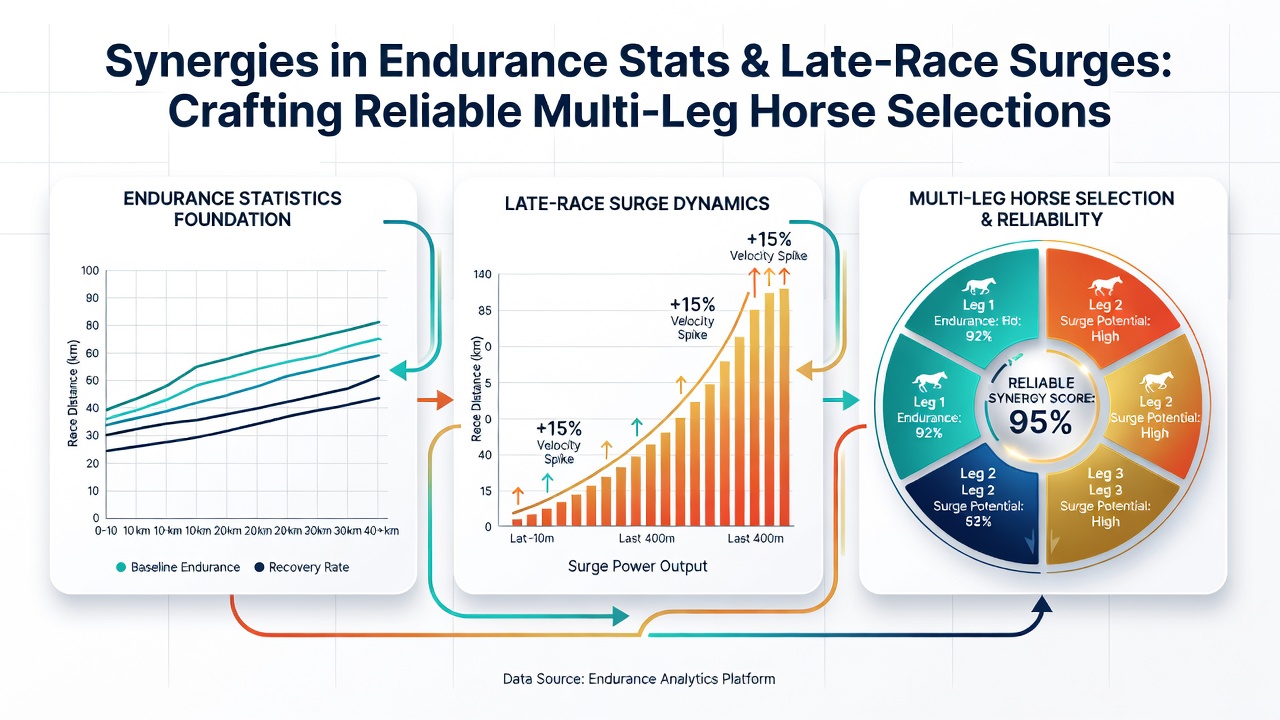
Integration occurs when endurance markers from the first two legs pair with surge data from the third and fourth, creating layered risk profiles that account for both attrition and finishing power. In August 2026, updated tracking software rolled out at several European venues provided finer granularity on surge timing, enabling more precise cross-referencing between stamina logs and closing speed charts. Analysts cross-check these against track variants and weather-adjusted benchmarks to refine the combinations that appear in accumulator structures.
Building Reliable Multi-Leg Combinations
Selectors review historical datasets to locate horses whose endurance scores remain stable across varying field sizes, while surge percentages hold in races with similar pace maps. Records from the Canadian Thoroughbred Horse Society demonstrate that entries meeting dual criteria of high stamina retention and above-average final-section velocities feature in elevated numbers of profitable multi-leg payouts over rolling 12-month windows. This approach emphasizes measurable overlap rather than isolated strong performances, and it accounts for variables such as jockey changes or barrier positions that influence energy distribution.
Case examples from recent campaigns illustrate how one horse with a proven 1,600-meter endurance base supports a later selection that excels in 300-meter closing bursts, and the combined profile reduces variance in overall accumulator outcomes. Software platforms aggregate these inputs into ranked lists, allowing users to filter for synergies while maintaining exposure limits across the legs. Regulatory updates scheduled for mid-2026 in several jurisdictions further standardize the reporting of sectional data, which in turn supports more consistent cross-meeting comparisons.
Practical Application Across Different Race Types
Flat racing circuits apply these metrics most directly because uniform surfaces produce clearer sectional readings, yet jumps events also yield usable endurance and surge information when adjusted for obstacle impact. Handicappers at major festivals incorporate both sets of figures when constructing selections for festivals that span multiple days, and the same principles scale to smaller meetings where fewer variables affect pace. International comparisons, including reports from the Hong Kong Jockey Club, confirm that horses displaying balanced endurance-surge ratios maintain performance consistency even when traveling between hemispheres and adapting to new track configurations.
Seasonal shifts influence the weighting of each metric, with summer ground favoring surge-oriented profiles and winter conditions elevating the value of raw endurance numbers. Data aggregation services compile these seasonal adjustments into accessible dashboards, and syndicates reference them when finalizing accumulator entries that stretch across varied conditions. The resulting combinations reflect documented interactions rather than isolated observations.
Conclusion
Endurance statistics and late-race surge measurements supply objective inputs for constructing multi-leg horse selections that align with observed performance trends across racing jurisdictions. Continued refinement of tracking technology and cross-referenced datasets supports incremental improvements in identifying compatible profiles for accumulator formats, while maintaining focus on verifiable records from established industry sources.